Products
Introducing the Lava Line: terpene formulations built around boiling point
Terpene blends specified by jar aroma lose their lightest molecules first. The Lava Line is formulated around the boiling point of every molecule instead.
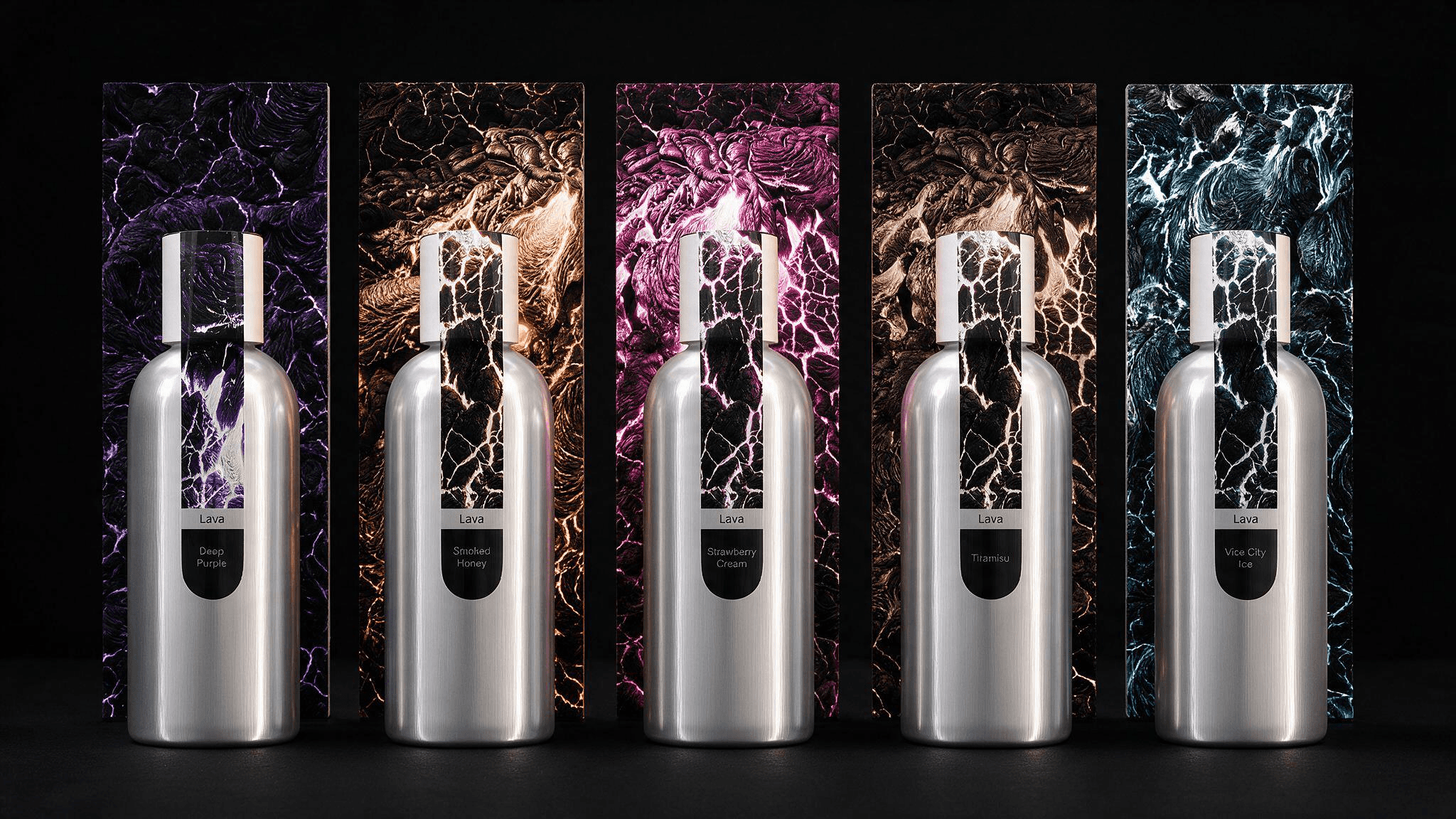

Most terpene blends are specified by how they smell in the jar. That tells you very little about what reaches the consumer at 250°C.
The Lava Line™ is specified the other way round. Every molecule in every profile is selected for its boiling point, mapped across the 150–300°C range where most cannabis-relevant terpene boiling points sit. Five profiles are available now.
The failure your QC lead already knows about
Front-loading. A blend that arrives striking on the first pull and thins through the back half. Same cart, same lot, a different experience by puff twenty.
In any multi-component mixture under heat, the lighter, more volatile molecules leave first. What remains is progressively heavier and structurally incomplete: the top of the profile is gone, and in a blend built for jar aroma, nothing was designed to hold it together without it.
Two failure modes, two protocols
A terpene profile fails under heat in two distinct ways.
Preferential depletion. The lighter, higher-vapor-pressure molecules leave earliest, in the order their volatility dictates. That produces front-loading, and it produces profile drift, where the delivered profile diverges further from the label the longer a run goes. Boiling-point mapping is the protocol for this one.
Thermal degradation. Some molecules break down instead of leaving intact, generating compounds that were never in the blend, which is where bitter, acrid and medicinal notes come from. Boiling point predicts this poorly: it's a function of molecular structure, bond energy, residence time and oxygen, and it needs its own screening protocol.
Three decisions behind every profile
Candidate molecules are screened for how they behave across the volatility range, not for how they read at room temperature. Each profile is then built deliberately across light, mid and heavy fractions rather than letting composition drift by accident.
Lighter molecules open the profile; heavier molecules carry depth and finish through the back half, where a jar-specified blend has already spent its top structure.
Anything that degrades into bitter, acrid or medicinal notes is excluded from the profile. Not masked, not balanced around.
About that 150–300°C figure
150–300°C at atmospheric pressure is a molecular property range: where the boiling points of most cannabis-relevant terpenes sit. It isn't an operating temperature, and it isn't a claim about your device. Measured coil surface temperatures run much higher. One 2022 study in PLOS ONE recorded 238–642°C across the devices tested, which makes a formulation whose molecules volatilize far below the coil surface the normal condition, not an edge case.
Individual figures also depend on measurement pressure, and that's where most published terpene boiling-point charts go wrong. Humulene appears almost everywhere at ~106°C, a reduced-pressure measurement. Corrected to atmospheric it sits near 275°C. We wrote that up separately, with sources and a way to check any number yourself.
Why formulators end up dosing for what they lose
An inclusion rate gets set against the weakest point in the delivered profile, because that's what decides whether the SKU reads as its label. In a blend specified by jar aroma, that's the back half of the run, after the light fraction has gone. So the rate rises to defend the end, and the front is over-dosed as a side effect.
A high inclusion rate is very often compensation for early loss. Most operators inherited their rate and were never told what it was paying for.
Hold the distribution and the weakest point moves closer to the average, so the rate can be set for the target instead of for the failure. Nothing in the load works against the profile either, because the off-note generators were excluded at screening. That's formulation headroom: budget left for whatever else has to be in the finished product, and less total volatile burden into a high-heat process.
What this changes, by seat
Formulation and R&D get a boiling-point distribution per SKU on the technical data sheet, with the measurement pressure stated on every row. The useful thing to do with it is ask your current supplier for the same document.
For brand and product managers, every flavor name on a shelf is a promise with your name on it. If a profile called Smoked Honey reads as smoked honey cold and generic sweet-harsh hot, the consumer holds your brand responsible.
For procurement, the spec is batch-locked lot over lot, so a Denver run and a Detroit run are the same molecule set in the same ratios behaving the same way. Certifications tell you a facility is clean. They say nothing about how a formulation behaves at 250°C, so ask for the thermal-stability protocol too.
Five profiles
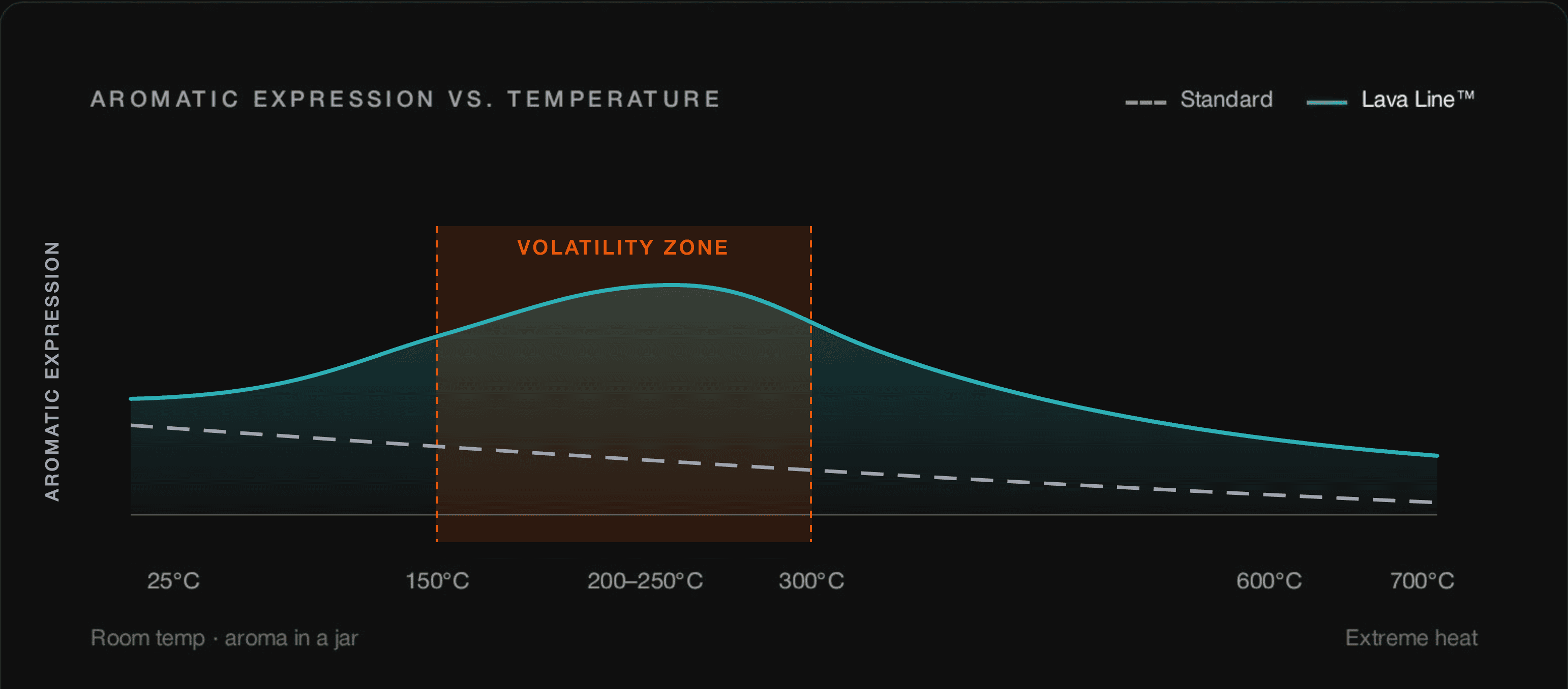
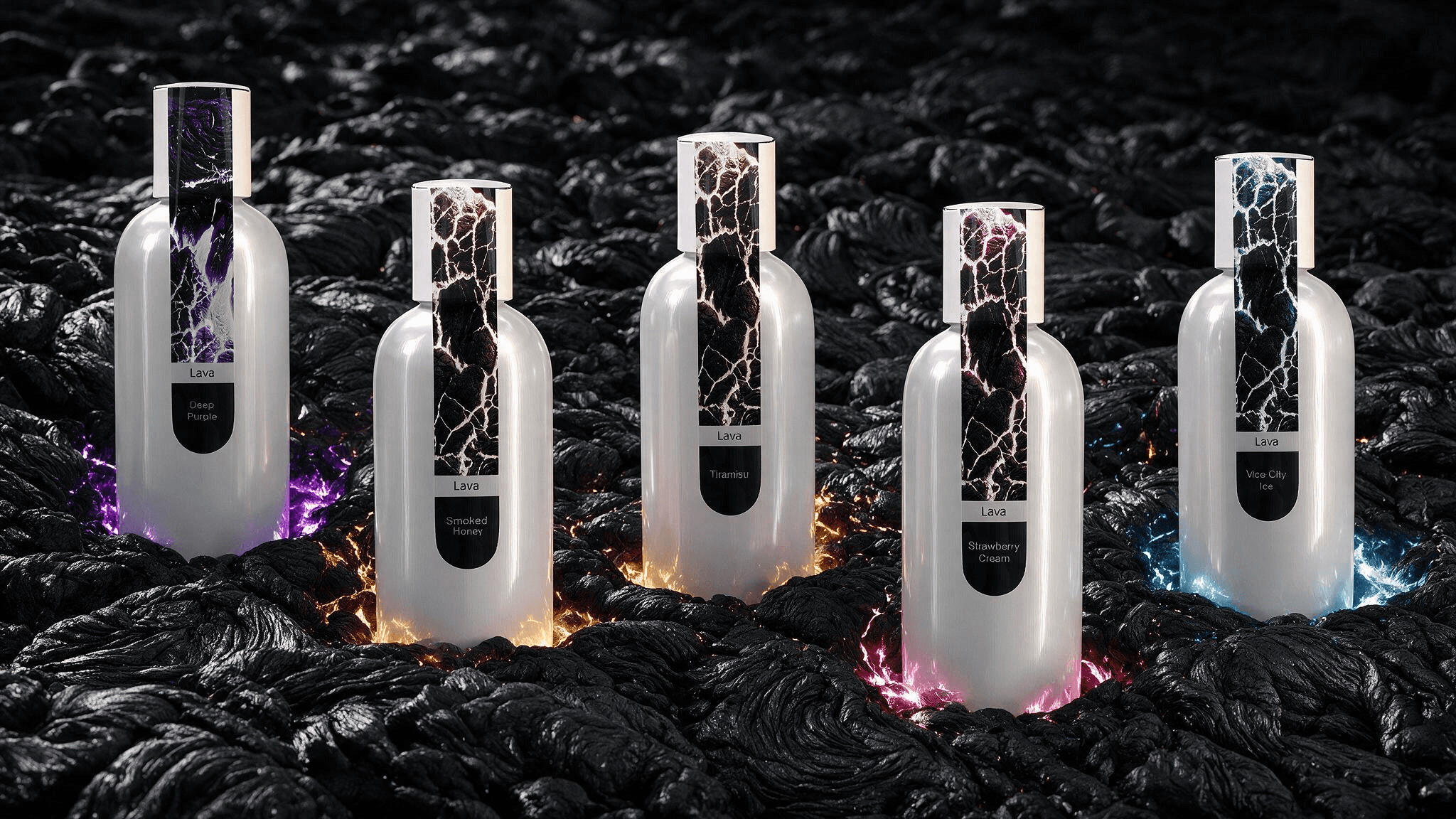
Smoked Honey. Aged honey over charred oak, with a faint leather note.
Vice City Ice. Mentholic cold, cold citrus, and a tropical top note.
Strawberry Cream. Candy, fresh and cooked strawberry under whipped cream.
Deep Purple. Concord-style dark grape and blueberry with a floral-cream halo.
Tiramisu. Espresso, vanilla cream and cocoa.
All five are 100% natural, food-grade molecules · GRAS · CAS-designated. Every lot ships with COA, SDS and TDS, produced under FSSC 22000, ISO 9001 and GMP.
Request a sample kit or tell us what your team is working on and we'll formulate a blend exclusively for you.


Start with a sample
Tell us what you want your product to do. We’ll come back with a validated, compliant formulation in 30 days.