


Monoterpenes
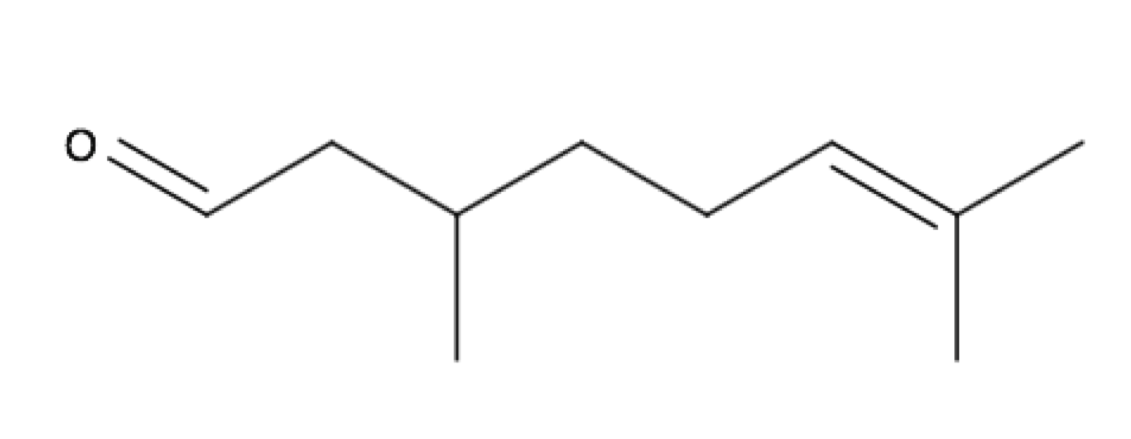
Citronellal – Terpene Profile
Citronellal is a monoterpenoid. It is a colorless to a pale yellow liquid. As its name suggests, citronellal can be found in the essential oils of citrus fruits such as lemon, lime, and kumquat, and lemongrass. A fragrance staple thanks to its alluring blended aroma of rose and lemon. The terpene’s citrusy flavor adds zest to desserts and candies. As a therapeutic agent, citronellal is primarily used to treat fungal infections. However, scientists are exploring additional use cases for citronellal, including but not limited to using citronellal for anti-inflammatory and antioxidant purposes.
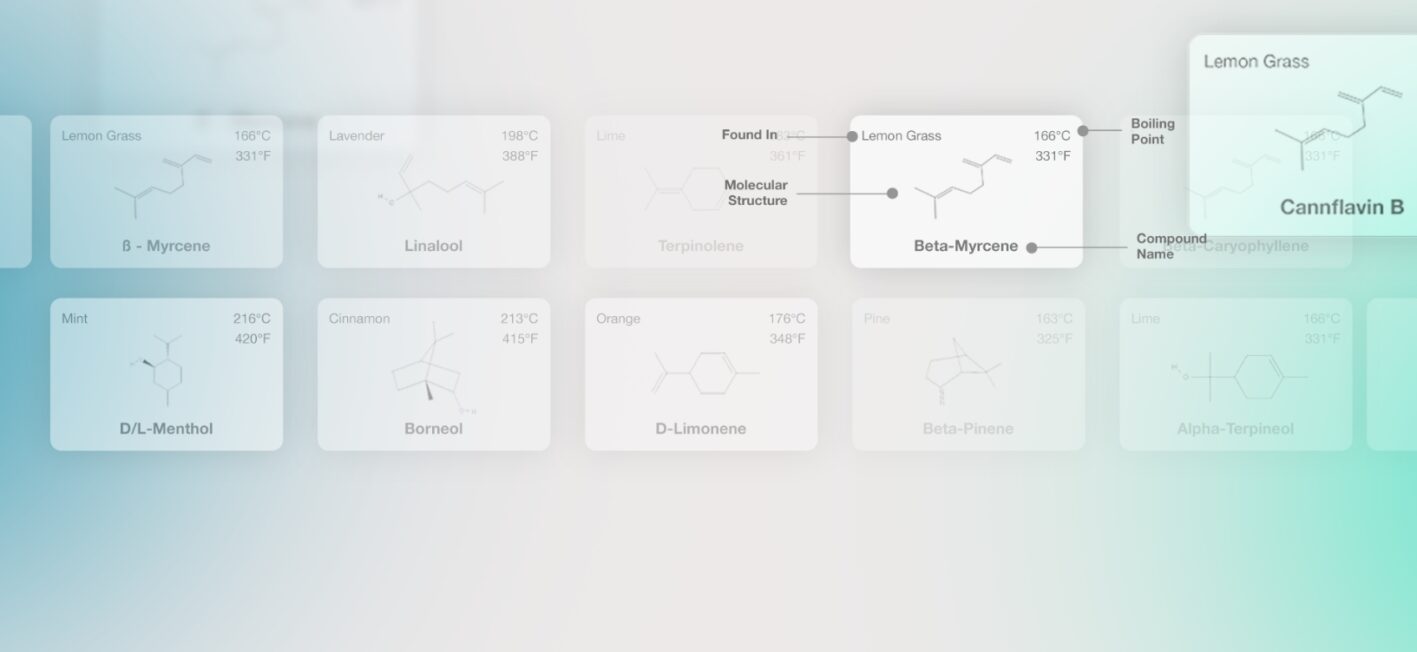
Found in
Lemongrass
Boiling Point
201℃
394℉
Medicinal qualities:
In vivo
Antinociceptive
Antinociceptive effect of citronellal in mice.
Melo, M. S., Sena, L. C. S., Barreto, F. J. N., Bonjardim, L. R., Almeida, J. R. G. S., & Lima, J. T. (2009)
Antinociceptive Effects of Citronellal in Formalin-, Capsaicin-, and Glutamate-Induced Orofacial Nociception in Rodents and Its Action on Nerve Excitability.
Quintans-Júnior, L. J., Pergentino de Sousa, D., Araújo, A. A. S., & Onofre, A. (2010)
Sedative
Evidence of the Sedative Effect of Neroli Oil, Citronellal and Phenylethyl Acetate on Mice.
Jäger, W., Buchbauer, G., Jirovetz, L., Dietrich, H., & Plank, C. (1992)
Mosquito repellent
Evaluation of Repellency Effect of Two Natural Aroma Mosquito Repellent Compounds, Citronella and Citronellal.
Jeong‐Kyu, K., Chang‐Soo, K., Jong‐Kwon, L., Young‐Ran, K., Hye‐Yun, H., & Hwa Kyung, Y. (2007)
In vitro
Antimicrobial
Antimicrobial Effect of trans-Cinnamaldehyde, (−)-Perillaldehyde, (−)-Citronellal, Citral, Eugenol and Carvacrol on Airborne Microbes Using an Airwasher.
Sato, K., Krist, S., & Buchbauer, G. (2006)
Fungicidal
Fungicidal effect of volatile oils from Eucalyptus citriodora and its major constituent citronellal.
Ramezani, H., Singh, H. P., Batish, D. R., Kohli, R. K., & Dargan, J. S. (2002)